


A resource that never ends: the care with water in the centuries of decadence after the end of the Roman Empire
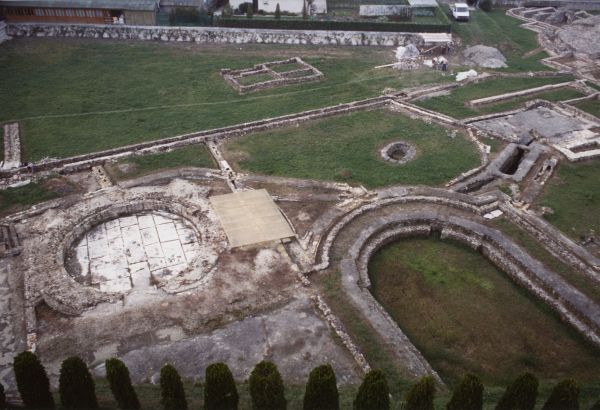
At the end of the Roman Empire, despite economic difficulties, it did not disappear. And while it was no longer visited through means of fashion and pleasure, it was frequented because of its water that, even with the advent of Christianity, was recognized as beneficial and curative.
At the beginning of the sixth century AD, Cassiodorus, the secretary of King Theodoric, wrote to the Paduan architect Aloisio to denounce the deterioration of the spa structures and urged their prompt restoration.
In the same years, the bishop of Pavia, Ennodio, also wrote his friend a letter to a friend of his stay in Padua and the good care he was given at the baths in Aponus.
There follows a period of silence in the sources, probably due to the barbarian invasions as well as to exceptional climatic and hydrographic events. People soon reorganized into a series of villages also in the Euganean spa district; in medieval documents, the town of Abano, whose name recalls the ancient God of water, is mentioned as well as San Pietro Montagnon, the site of the protohistoric Sanctuary of the Venetians, and Montigroto, or Mons Aegrotorum, as the sources refer, which is the “mountain of the sick”, with a significant reference once again to the healing and beneficial properties of the Euganean water.
Text written by Prof. Paola Zanovello, Department of Ancient Sciences, University of Padua
Continue reading with Famous visitors and the oracle of Aponus