


Cyanobacterium aponinum ETS-03
Cyanobacterium aponinum ETS-03 is one of the first microorganisms isolated from maturing thermal muds at approximately 40 °C in the Euganean Thermal District. The name given to the species recalls Aponus, the ancient god of the thermal springs in this area (for more information, see the History of Euganean Thermalism section).
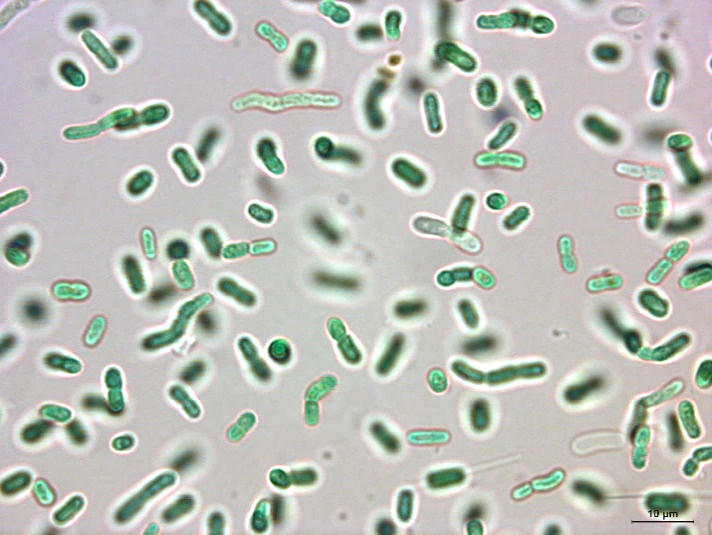
This cyanobacterium is distinct from many others found in the same environment due to its rounded, coccoid (non-filamentous) shape. It appears pale blue-green in color, and the cells can associate into large aggregates that are easily visible under the microscope (Figure 1).
Genetic analyses conducted by Moro et al. (2007) identified ETS-03 as belonging to the Cyanobacterium genus. Its genetic marker is closely related to that of cyanobacteria isolated from Japanese and Icelandic hot springs. The gene sequence (16S rDNA) is registered in international databases (accession number AM238427.1).
Subsequent research by Gris et al. (2017) investigated the potential biotechnological applications of this microorganism, particularly for the production of bioactive compounds. The study focused on determining the optimal growth temperature, established at 40 °C — consistent with thermal mud maturation conditions — and on the production of biomolecules such as polysaccharides and pigments. These compounds accumulate in therapeutic muds and, due to their potential health benefits, are already used in various sectors, from cosmetics to nutraceuticals.
The species was also detected using next-generation sequencing techniques (Gris et al. 2020) in mature thermal muds, and to a lesser extent, in virgin clays from thermal lakes.
Currently, Cyanobacterium aponinum ETS-03 is cultivated and preserved in the Culture Collection of the Plant Genome Editing and Phenotyping Facility of the Department of Biology at the University of Padua, on behalf of the Pietro d’Abano Thermal Studies Center.