


The regeneration technique
After the treatment, a composite bacterial load from the patient may be present in the mud and it must be eliminated. For this reason, it is essential that the mud after application is placed back in a tank isolated from all other tanks, especially from the one in use, to avoid contamination.
The sterilization of the used mud must involve increasing the temperature and running a constant flow of water for a few days at a temperature no lower than 55° C.
After 3 days, the rise in temperature allows the mud to have no bacterial and possible pathogenic load. Only after that time can the tank be reconnected with the other tanks that are in the maturation and/or regeneration phases.
After sterilization, to recover the therapeutic properties transferred during the treatment, mud must remain in contact with thermal water for a few weeks at a temperature below 40° C, to promote the growth of the active felt containing the curative cyanobacteria. The correct exposure to solar radiation must also be considered.
If the water temperature is suitable, after the first week of maturation, it is possible to visually measure the first colonization of blue green algae on the mud surface.
Before starting the regeneration of used mud, and after its disinfection by increasing the temperature, it is possible to promote the colonization of the healing algae both by maintaining the temperature at values near 40° C and by depositing on the mud surface of the tank a little of green-blue active felt collected from another tank containing mature mud (i.e. initial fertilization).
During the regeneration time, the healing properties of the mud are restored and, in particular, the following characteristics are recovered:
- viscosity and plasticity,
- the therapeutic principles produced by cyanobacteria. The cyanobacteria growth is demonstrated by the presence of the compact blue-green felt (see fig. 1) and it is maximized by the temperature control, by the ideal conditions of solar radiation and by the initial fertilization done by collecting some felt from another tank of mature mud.
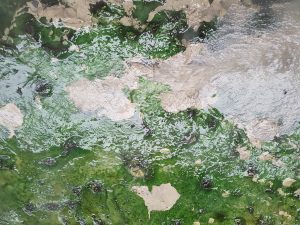
Fig. 1 – Growth of the felt during the mud’s regeneration process
Continue reading with “Anti-inflammatory active ingredients in Euganean thermal mud” European Patent