


Thermal Mud as an Active Biological System: From Tradition to Science
In recent years, the Pietro d’Abano Thermal Studies Center has carried out an extensive research program aimed at understanding and enhancing the scientific basis of the therapeutic effectiveness of Euganean thermal muds, which have been renowned for centuries for their benefits in treating joint pain, chronic inflammation, and musculoskeletal disorders. This ambitious project sought not only to demonstrate the biological effects of thermal mud but also to identify the molecules responsible for these effects, understand how they are produced, and determine the organisms from which they originate.
The project was developed in collaboration with the Department of Biology at the University of Padua, which has been studying the biodiversity of thermophilic cyanobacteria for decades, as well as with researchers from the Universities of Florence and Brescia. Our approach was multidisciplinary, combining microbial ecology, biochemistry, molecular biology, and preclinical models to build a comprehensive framework capable of transforming an empirical practice into a scientifically validated therapy.
The Microbiota of Mature Thermal Mud: A Unique Ecosystem
A crucial first step was the investigation of the microbiota present in mature thermal muds from Euganean spa facilities. Published in Microorganisms in 2020, this study demonstrated that the maturation process—which lasts at least sixty days in thermal water at temperatures ranging from 37°C to 47°C—gives rise to a rich, stable, and well-defined microbial community.
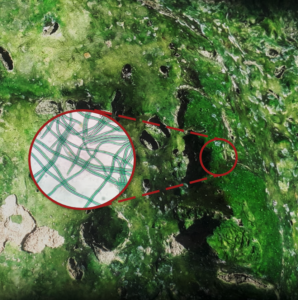
Within this community, thermophilic cyanobacteria such as Phormidium sp. ETS-05 predominate, forming the characteristic blue-green biofilm visible on the surface of mature mud. This biofilm is not merely a visual indicator; it plays a central role in the maturation process by releasing a variety of bioactive molecules, including complex polysaccharides that disperse throughout the mud and alter its biological properties.
Bioactive Molecules: The Role of Polysaccharides
Building on these findings, we isolated and characterized extracellular polysaccharides produced by these organisms, particularly Phormidium. In a study published in Biomolecules in 2020, we demonstrated their anti-inflammatory activity in vivo. Using a zebrafish inflammation model, we observed a significant reduction in neutrophil migration toward the injury site—one of the clearest indicators of active anti-inflammatory effects. This provided the first direct evidence linking a molecule produced by thermal mud cyanobacteria to a measurable biological response.
In 2022, in a study published in the International Journal of Biological Macromolecules, we expanded this research by investigating a complex polysaccharide extract obtained directly from mature thermal mud. The results were highly encouraging: in addition to confirming its anti-inflammatory properties, the extract exhibited strong antioxidant activity. It protected cells from oxidative stress, stimulated the activity of protective enzymes such as catalase and superoxide dismutase, and modulated gene expression. These findings confirmed that mature thermal mud, through the activity of its microbial community, becomes an active therapeutic system capable of naturally counteracting inflammation.
New Species and Thermal Microbial Biodiversity
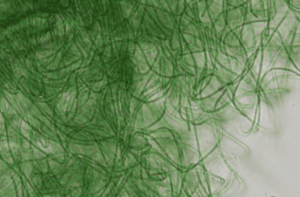
In March 2025, we published in Frontiers in Microbiology the description of a new cyanobacterial species isolated from thermal mud: Kovacikia euganea ETS-13. This rare and remarkable organism is noteworthy not only because it represents a new taxonomic entity, but also because it can utilize near-infrared light through the production of chlorophyll f, a recently discovered form of chlorophyll. This capability enables it to thrive in ecological niches where visible light is absent and only longer-wavelength radiation remains, as may occur in deeper layers of thermal mud tanks. This extraordinary adaptation further highlights the uniqueness of the Euganean thermal environment and suggests that such organisms may represent valuable sources of rare and biologically active compounds.
The discovery of Kovacikia is not an isolated case. It is part of a broader research line that has led to the identification of several novel microbial species by our group. In 2016, a phylogenetic study published in Molecular Phylogenetics and Evolution resulted in the description of the genus Thermoleptolyngbya, a group of filamentous thermophilic cyanobacteria. Subsequently, in 2021, Thermospirulina andreolii was described and named in honor of Professor Giovanni Andreoli, a pioneer in the study of cyanobacterial biodiversity in thermal environments.
These discoveries are significant not only from a taxonomic perspective. They reinforce the concept that the Euganean thermal basins constitute a hotspot of unique microbial biodiversity, shaped by extreme yet stable environmental conditions, including high temperatures and elevated concentrations of salts and minerals.
Molecular Mechanisms: How Polysaccharides Exert Their Effects
In our most recent study, published in Antioxidants in July 2025, we investigated the molecular mechanisms through which microbial polysaccharides interact with biological systems. We found that these compounds can selectively regulate key inflammatory pathways, including TNF-α/NF-κB and IL-6/JAK/STAT signaling, reduce apoptosis, and restore antioxidant balance at the tissue level. These effects were observed as early as 2–4 hours after administration and were confirmed through RNA-seq and RT-qPCR analyses. These findings strengthen the view that thermal mud maturation generates a natural reservoir of therapeutic molecules that are effective, safe, and biocompatible.
A New Perspective on Thermal Mud
The body of research that we have promoted, funded, and conducted over the years now offers a robust and innovative perspective on thermal mud. Rather than serving merely as a vehicle for heat transfer, thermal mud should be viewed as a living bioreactor in which the maturation process generates therapeutic substances with anti-inflammatory and antioxidant properties.
The clinical benefits derive not only from heat and mineral salts but also—and perhaps primarily—from glycolipids, previously identified by our institution, and from the recently discovered bioactive polysaccharides produced by selected microorganisms that thrive under the unique physicochemical conditions of Euganean thermal waters.
The value of this research is twofold. On one hand, it strengthens the scientific foundations of mud therapy and opens concrete opportunities for applications in medicine, nutraceuticals, and cosmetics. On the other, it contributes to documenting and preserving a unique microbial biodiversity that represents a genetic and functional resource of great importance for future biotechnology.

Future Perspectives
Our goal for the coming years is to continue along this path by expanding preclinical and clinical studies, identifying new bioactive molecules, and developing standardized formulations that preserve the natural effectiveness of thermal mud. In doing so, we aim to create new sustainable therapeutic opportunities while fully respecting both the environment and the thermal heritage that we are committed to preserving and promoting.